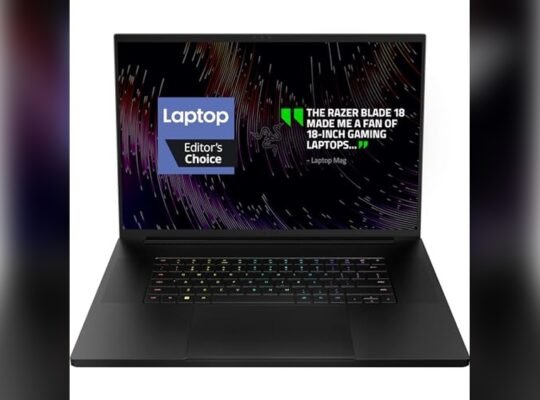

Choosing the perfect desktop replacement laptop can be overwhelming, especially when two giants like the Asus ROG Strix Scar 18 and the Razer Blade 18 (2026) go head-to-head. You want a machine that not only packs power but also delivers reliability, smooth performance, and the features that fit your lifestyle.
But which one truly earns the crown? This detailed comparison will help you cut through the noise, avoid common pitfalls, and make the choice that’s right for your gaming and work needs. Ready to find out which beast deserves a spot on your desk?
Keep reading to discover the ultimate desktop replacement showdown.
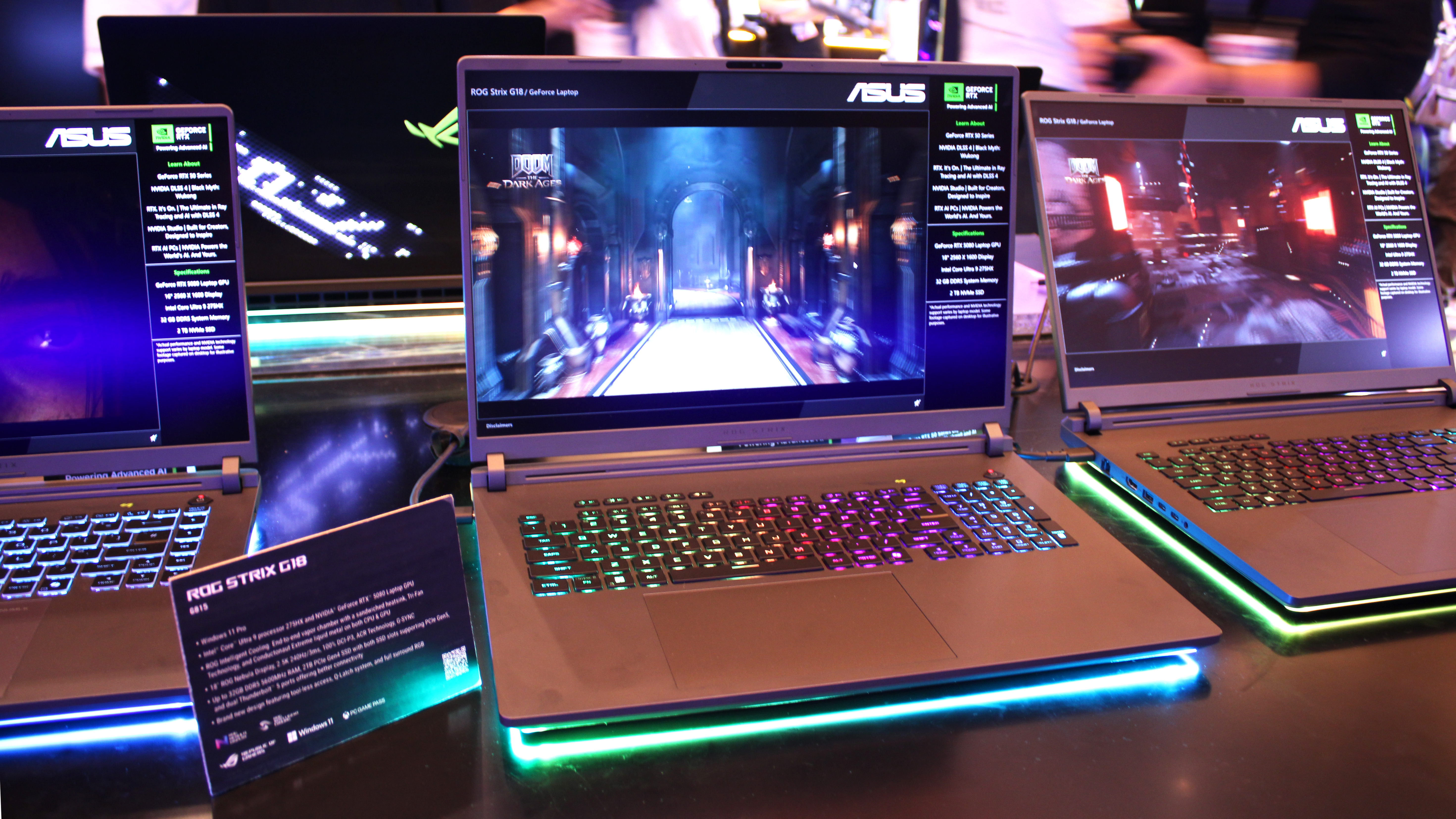
Credit: www.laptopmag.com
Design And Build
The design and build quality of a laptop affect both its look and user experience. For desktop replacements like the Asus ROG Strix Scar 18 and the Razer Blade 18, these factors are even more important. They need to be sturdy yet stylish, with practical features that support heavy use. Both models focus on strong construction but take different approaches to materials and design details. This section explores their chassis, ports, and portability to help you understand which suits your needs better.
Chassis And Materials
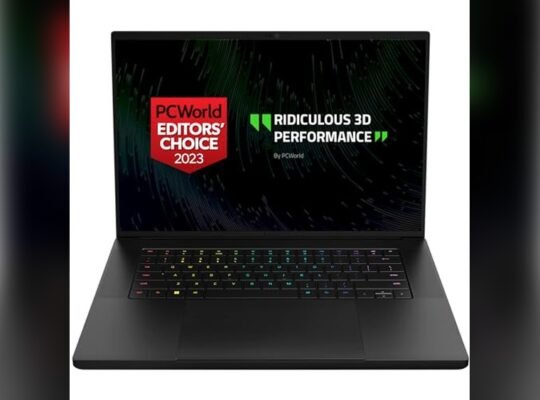
The Asus ROG Strix Scar 18 uses a mix of metal and high-grade plastic. It feels solid and built for long gaming sessions. The surface has a matte finish that reduces fingerprints. The Razer Blade 18 features an all-metal unibody chassis. It looks sleek and premium with a smooth, brushed aluminum finish. Both laptops have strong hinges that keep the screen steady. The Scar 18 leans toward a more aggressive gaming look. The Blade 18 has a minimalist and professional style.
Port Selection
The Asus ROG Strix Scar 18 offers a wide variety of ports. It includes multiple USB Type-A and Type-C ports, HDMI, Ethernet, and a headphone jack. This selection suits users who connect many devices. The Razer Blade 18 has fewer ports but covers the essentials. It includes USB-C Thunderbolt ports, USB Type-A, HDMI, and a headphone jack. The Blade’s ports focus on speed and versatility but may require dongles for some users. Both laptops support external displays and fast data transfer.
Weight And Portability
The Asus ROG Strix Scar 18 is heavier, weighing around 6 pounds. It feels bulky but manageable for a desktop replacement. This weight comes from extra cooling and a larger battery. The Razer Blade 18 is lighter at about 5.2 pounds. It is easier to carry and fits better in backpacks. The Blade 18 offers better portability without sacrificing performance. Both laptops are thick compared to ultrabooks but built for power over mobility.
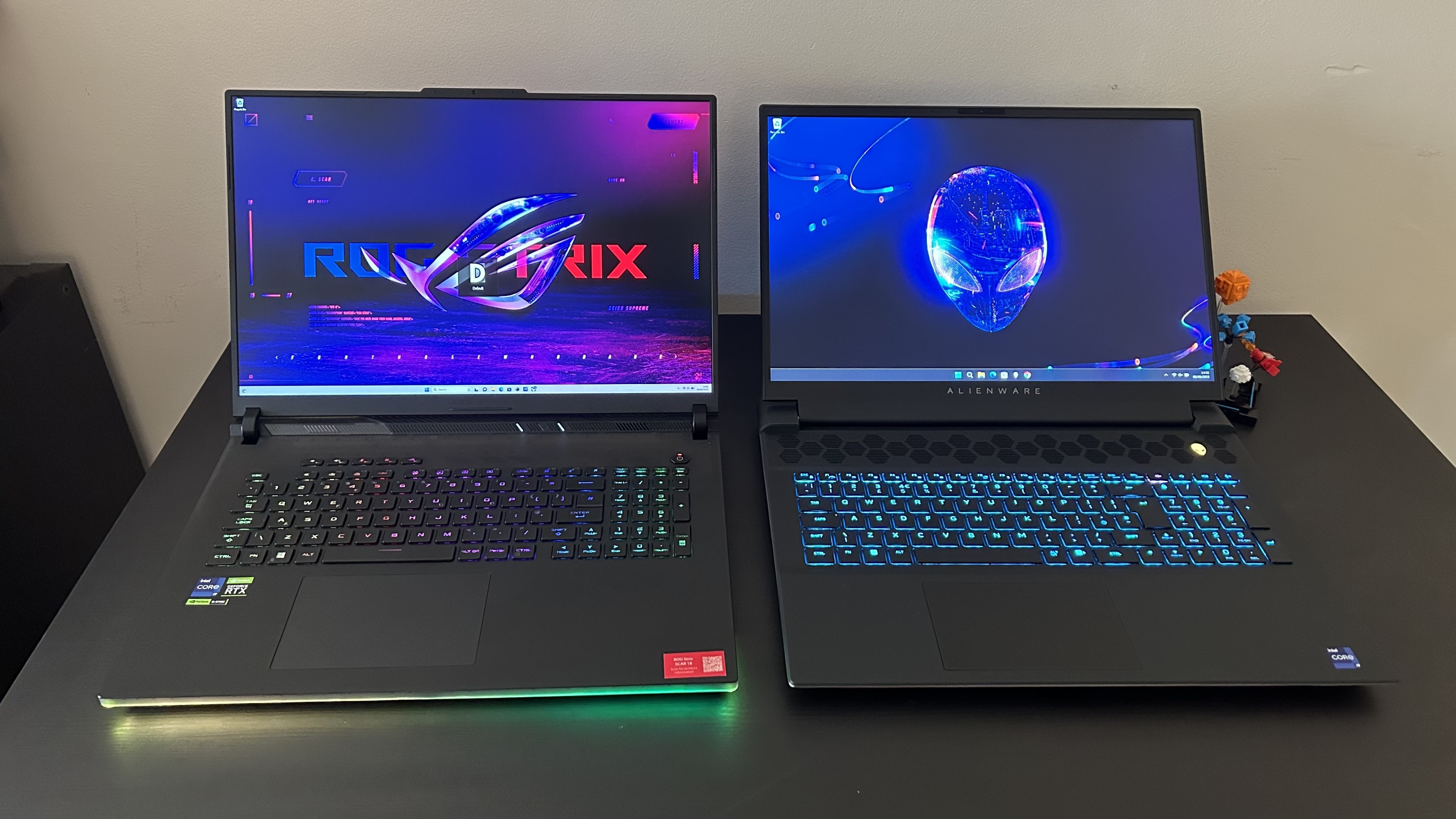
Credit: www.gamesradar.com
Display Features
The display is a key factor for anyone choosing a desktop replacement laptop. Both the Asus ROG Strix Scar 18 and the Razer Blade 18 focus on strong visual performance. Their screen quality supports gaming, work, and entertainment with high standards. This section compares their display features in detail.
Screen Size And Resolution
The Asus ROG Strix Scar 18 offers a large 18-inch screen. It delivers a 2560×1600 resolution, providing sharp and clear images. The Razer Blade 18 matches the 18-inch size but ups the resolution to 3200×1800. This gives the Razer Blade a slight edge in image detail and workspace area.
Refresh Rate And Color Accuracy
Both laptops feature high refresh rates for smooth visuals. The Asus ROG Strix Scar 18 supports up to 240Hz, ideal for fast-paced games. The Razer Blade 18 offers a 165Hz refresh rate, which is still very smooth. Color accuracy is strong on both devices, with factory calibration ensuring vivid and true-to-life colors.
Brightness And Viewing Angles
The Asus ROG Strix Scar 18 reaches brightness levels near 500 nits, making it visible in bright rooms. The Razer Blade 18 offers about 400 nits, sufficient for most indoor settings. Both screens use IPS panels, delivering wide viewing angles and consistent colors from different perspectives.
Performance Specs
The Asus ROG Strix Scar 18 and Razer Blade 18 (2026) are top contenders in the desktop replacement laptop category. Both models offer powerful performance specs that cater to gamers and creators alike. Their hardware choices focus on speed, graphics quality, and multitasking capabilities. Understanding the differences in CPU, GPU, memory, storage, and cooling systems helps choose the right machine for your needs.
Cpu And Gpu Options
The Asus ROG Strix Scar 18 features the latest Intel Core i9 processors. These CPUs deliver high clock speeds and multiple cores for heavy workloads. The Razer Blade 18 also offers Intel Core i9 options but tends to favor slightly lower thermal output models.
For graphics, the Scar 18 includes NVIDIA GeForce RTX 4090 GPUs. These provide excellent ray tracing and AI-powered performance. The Razer Blade 18 matches this with RTX 4090 options as well but may offer models with lower wattage for better battery life.
Memory And Storage
Both laptops support up to 64GB of DDR5 RAM. This ensures smooth multitasking and fast application loading. Asus allows faster RAM speeds up to 5600 MHz compared to Razer’s 5200 MHz. Storage-wise, both systems come with PCIe Gen 4 SSDs, offering quick boot times and file transfers. The Scar 18 supports dual M.2 slots for expanded storage capacity.
Thermal Management
The Asus ROG Strix Scar 18 uses an advanced cooling system with liquid metal thermal compound. This improves heat dissipation from the CPU and GPU. It also has a larger fan design and multiple heat pipes to keep temperatures low under load.
The Razer Blade 18 employs vapor chamber cooling technology. It focuses on quiet operation but may run hotter during intense gaming. Both laptops include customizable fan profiles to balance noise and performance.
Software And User Experience
Software and user experience play a crucial role in choosing a desktop replacement laptop. Both the Asus ROG Strix Scar 18 and the Razer Blade 18 offer unique software environments that affect daily use. From preinstalled apps to customization options, these elements shape how users interact with their machines.
Preinstalled Software
The Asus ROG Strix Scar 18 comes with Armoury Crate. This app manages system settings, lighting, and performance profiles. It provides easy access to gaming modes and hardware controls. Users get a streamlined interface for updates and system monitoring.
Razer Blade 18 includes Razer Synapse. This software focuses on device customization and lighting effects. It links with other Razer peripherals for a unified experience. Synapse also stores user profiles in the cloud for convenience.
Customization And Control
Armoury Crate offers deep hardware control on the Asus ROG Strix Scar 18. Users can adjust fan speeds, CPU and GPU settings, and RGB lighting. Profiles switch automatically based on the active game or app. This flexibility helps balance performance and noise levels.
Razer Synapse allows detailed customization on the Razer Blade 18. Lighting zones can be personalized with many effects. Users can remap keys and create macros. The cloud sync ensures settings stay consistent across devices. However, the software can be complex for new users.
Common Software Issues
Asus software is generally stable but may have occasional glitches after updates. Some users report Armoury Crate freezing or failing to detect hardware. These issues are usually fixed with patches.
Razer Synapse has more reported problems. Users face FPS drops and double key presses linked to the software. Stability issues, like freezing and crashes, appear during gaming sessions. Some prefer uninstalling Synapse to avoid conflicts, though this disables customization features.
Battery And Power
The battery and power features are crucial in choosing a desktop replacement laptop. Both Asus ROG Strix Scar 18 and Razer Blade 18 (2026) offer strong performance. Their power systems support long usage and fast charging. Understanding their battery life, charging speed, and power efficiency helps find the best fit.
Battery Life
The Asus ROG Strix Scar 18 provides around 5 to 6 hours of mixed use. It handles gaming and heavy tasks well before needing a recharge. The Razer Blade 18 offers slightly less battery life, about 4 to 5 hours. Its high-resolution display and powerful GPU consume more power. Neither laptop is built for all-day battery use but can last through moderate work sessions.
Charging Speed And Methods
Both laptops support fast charging technology. The Asus ROG Strix Scar 18 uses a 330W power adapter. It charges the battery quickly, reaching 50% in about 30 minutes. The Razer Blade 18 includes a 280W charger, also fast but a bit slower. Both allow USB-C charging for convenience. USB-C lets users charge on the go with compatible power banks or chargers.
Power Efficiency
ROG Strix Scar 18 balances power and efficiency well. It uses advanced cooling to reduce energy waste. The Razer Blade 18 focuses on performance with good power management. It sometimes runs hotter, which may reduce efficiency. Both laptops include settings to optimize battery usage. Users can choose modes to save power or boost performance depending on needs.
Connectivity And Audio
Connectivity and audio are vital for any desktop replacement laptop. Both the Asus ROG Strix Scar 18 and Razer Blade 18 offer strong features to keep you connected and deliver quality sound. These elements impact your daily work, gaming, and communication.
Wireless And Wired Connections
The Asus ROG Strix Scar 18 supports Wi-Fi 6E for fast, reliable wireless internet. It also includes Bluetooth 5.3 for connecting peripherals smoothly. The Razer Blade 18 matches this with Wi-Fi 6E and Bluetooth 5.3 as well.
Wired connections differ slightly. The Scar 18 provides multiple USB Type-A and Type-C ports. It also has an Ethernet port for stable wired internet. The Razer Blade 18 offers similar USB options but lacks a dedicated Ethernet port. It relies on adapters for wired connections.
Audio Quality
Audio performance matters for gaming and video calls. The Asus ROG Strix Scar 18 features dual speakers with Smart Amp technology. This setup delivers clear, loud sound with good bass. The Razer Blade 18 has stereo speakers tuned by THX. They produce balanced and immersive audio but at slightly lower volume.
Both laptops support 3.5mm headphone jacks. They offer good sound output for headphones and external speakers.
Camera And Microphone
The Asus ROG Strix Scar 18 comes with a 1080p HD webcam. It offers sharp and bright video for streaming or meetings. The Razer Blade 18 also includes a 1080p webcam, providing clear video quality.
Microphones on both devices capture voice well. They reduce background noise for clearer communication. This makes both laptops suitable for video calls and streaming.
Reliability And Support
Reliability and support are key factors for anyone choosing between the Asus ROG Strix Scar 18 and the Razer Blade 18. Both laptops aim to serve as powerful desktop replacements. Knowing their hardware strengths and weaknesses helps buyers avoid future headaches. Support quality also impacts user experience after purchase. Warranty and repair services add peace of mind for long-term use.
Known Hardware Issues
The Asus ROG Strix Scar 18 shows strong build quality but some users report keyboard backlight problems. Occasional fan noise spikes occur under heavy load. The Razer Blade 18 faces more frequent hardware issues. Common problems include trackpad malfunctions like skipping or unresponsiveness. Battery swelling has been reported, which risks internal damage. Overheating can lead to thermal throttling, reducing performance. Screen flickering and GPU power limits also affect some units.
Customer Support Quality
Asus customer support generally receives positive feedback for helpfulness and response times. Online forums and service centers are widely available. Razer’s support is more mixed. Some customers find responses slow or unhelpful. Users often mention difficulty in getting issues resolved quickly. Software bugs, especially with Razer Synapse, can add to frustration. Asus tends to offer better guidance and troubleshooting resources.
Warranty And Repairs
Both companies offer standard one-year warranties on their laptops. Asus includes options for extended warranty plans at purchase. Repair services for Asus products are accessible through many authorized centers. Razer also provides warranty coverage but repair turnaround times vary. Some users report longer wait periods for parts and fixes. Extended warranty options are available but at a higher cost. Considering warranty extensions may be wise for heavy users.
Price And Value
The price and value of the Asus ROG Strix Scar 18 and Razer Blade 18 shape their roles as desktop replacements. Both laptops aim to deliver top performance but differ in cost and features. Understanding their pricing and what you get helps decide the better choice.
Pricing Tiers
The Asus ROG Strix Scar 18 starts at a lower price point than the Razer Blade 18. Its base model offers strong specs suitable for most users. The Razer Blade 18 commands a premium, reflecting its build and brand.
As you move to higher tiers, the price gap widens. Asus focuses on delivering value-packed upgrades. Razer adds luxury touches and slight performance boosts that raise costs.
Value For Money
Asus provides excellent power for the price. Its cooling system and keyboard stand out in this segment. Users get more hardware for less cash.
The Razer Blade 18 offers a sleek design and premium materials. It appeals to buyers who want style with power. The software experience, though, may affect value negatively.
Comparison With Competitors
Compared to other desktop replacements, the Asus ROG Strix Scar 18 offers competitive pricing. It undercuts many rivals while maintaining high specs. This makes it a strong contender for budget-conscious buyers.
The Razer Blade 18 is among the most expensive in its class. Its design and brand appeal justify the cost for some. But reported hardware and software issues may impact long-term satisfaction.
Gaming And Creative Use
The Asus ROG Strix Scar 18 and Razer Blade 18 (2026) are powerful laptops designed for both gaming and creative tasks. Each model targets users who need a desktop replacement with strong performance. This section explores how these laptops handle gaming and content creation. Understanding their strengths helps choose the right fit for your needs.
Gaming Performance
The ROG Strix Scar 18 delivers smooth gameplay at high settings. It features a fast refresh rate and a powerful GPU that supports modern games well. Frame rates stay stable even in demanding titles. The Razer Blade 18 also offers excellent gaming power with a sleek design. It runs games at high quality but may show slight dips in extreme settings. Both laptops support ray tracing and high-resolution gaming, but the Scar 18 often leads in raw frame rates. Gamers who want consistent speed may prefer the Scar 18. Those favoring portability might lean toward the Blade 18.
Content Creation Capabilities
For creative work, the Razer Blade 18 shines with its color-accurate display. It suits video editing, photo retouching, and 3D modeling. The Scar 18 has a bright screen and strong processing power, good for multitasking and rendering. Both laptops include high-end CPUs and enough RAM for demanding software. The Blade 18’s build quality and screen calibration make it ideal for artists and designers. Meanwhile, the Scar 18 balances power and display size for creators needing speed. Either choice handles editing tasks smoothly and supports external monitors for expanded workflows.
Thermal Throttling Impact
Heat affects performance in both laptops during long sessions. The Scar 18 uses an advanced cooling system to reduce thermal throttling. This keeps the CPU and GPU running near peak speeds longer. The Razer Blade 18, while thinner, can experience more heat buildup under load. This may cause slight drops in performance after extended use. Proper cooling solutions and airflow help maintain speed and prevent damage. Users should consider their usage patterns. Heavy gaming or editing favors the Scar 18’s thermal management, while lighter use suits the Blade 18.
Final Comparison
The final comparison between the Asus ROG Strix Scar 18 and the Razer Blade 18 focuses on their key features and user experience. Both laptops aim to replace a desktop with powerful hardware and sleek design. Understanding their strengths helps to pick the right one for your needs.
Strengths Of Asus Rog Strix Scar 18
The Asus ROG Strix Scar 18 delivers excellent performance with its high-end CPU and GPU. It has a robust cooling system that keeps temperatures low during intense gaming or work. The keyboard is comfortable, with good key travel and customizable RGB lighting. Its screen offers bright colors and a fast refresh rate, ideal for smooth visuals. Battery life is decent, supporting long sessions away from power outlets. The laptop also provides more ports, which is useful for connecting multiple devices.
Strengths Of Razer Blade 18
The Razer Blade 18 stands out with its premium build quality and sleek design. It is lighter and thinner, making it easier to carry. The display is bright and sharp, with excellent color accuracy for creative work. It features a quieter cooling system, which reduces noise during operation. The keyboard has good feedback and a clean layout. Razer’s software offers customizable settings for performance and lighting. The laptop also supports fast charging, adding convenience for busy users.
Which One Suits You Best
Choose the Asus ROG Strix Scar 18 if you prioritize raw power and cooling. It fits gamers and users who connect many accessories. The Razer Blade 18 suits those who want a stylish, portable laptop with strong performance. It works well for creators and professionals on the move. Both laptops offer desktop-level power, so your choice depends on your lifestyle and preferences.

Credit: www.youtube.com
How The Laptop Scout Can Help You with Asus Rog Strix Scar 18 Vs Razer Blade 18 (2026): The Ultimate Desktop Replacement
Practical Learning from the Asus Rog Strix Scar 18 Vs Razer Blade 18 Comparison
When deciding between the Asus Rog Strix Scar 18 and the Razer Blade 18, it’s helpful to think beyond specs and consider what the laptop will truly offer in your daily routine. Reflecting on design and build quality alongside battery and power management reveals how each machine handles long work or gaming sessions, especially if you’re balancing hybrid work or content creation.
From my experience as a trusted tech scout at The Laptop Scout, focusing on real-world use means weighing the pros and cons of their displays and connectivity options—not just marketing claims. This helps you pick a device that fits your lifestyle, whether it’s for crisp visuals during creative projects or reliable ports for peripherals.
- Test each laptop’s performance under your typical workload to assess thermal management and battery endurance.
- Consider software experience and support, as these can affect daily productivity and long-term satisfaction.
If you want to dive deeper into these factors or need personalized insights, feel free to reach out to us at contact@thelaptopscout.com. We’re here to help you cut through the noise and find the right fit for your needs.
Frequently Asked Questions
Which Is Better, Rog Strix Or Scar?
ROG Strix offers a balanced design for gaming and productivity. Scar focuses on esports with higher performance and premium features. Choose Strix for versatility; pick Scar for competitive gaming and top-tier specs. Both deliver excellent build quality and performance.
What Are Common Problems With Razer Blades?
Common Razer Blade problems include trackpad failures, overheating, battery swelling, buggy Synapse software, screen glitches, and poor customer support.
Is Rog Or Rog Strix Better?
ROG Strix offers better cooling, RGB customization, and premium build. Standard ROG focuses on balanced performance and affordability. Choose based on your budget and feature needs.
Is The Razer Blade The Best Gaming Laptop?
The Razer Blade offers premium design and strong performance but has common issues like overheating, software bugs, and poor customer support. It ranks high but may not be the absolute best gaming laptop for everyone.
Conclusion
Both Asus Rog Strix Scar 18 and Razer Blade 18 offer strong desktop replacement options. Asus focuses on cooling and performance stability. Razer shines with sleek design but faces some reliability issues. Choose based on what matters most: power or portability.
Either way, both deliver high-end gaming and work capabilities. Consider your budget and personal preferences carefully. This comparison helps you make a clear choice.